
LECTURAS RECOMENDADAS

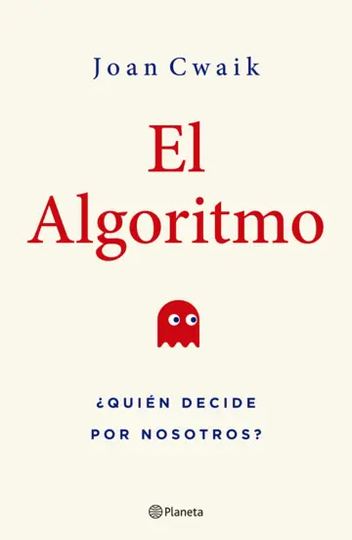
Cwaik, Joan. El algoritmo. ¿Quién decide por nosotros? Buenos Aires: Planeta, 2025.
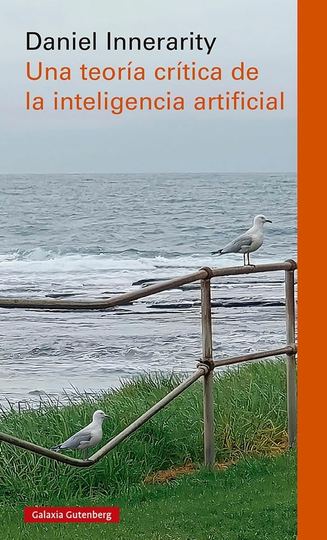
Innerarity, Daniel. Una teoría crítica de la Inteligencia Artificial.  Madrid: Galaxia Gutenberg, 2025.
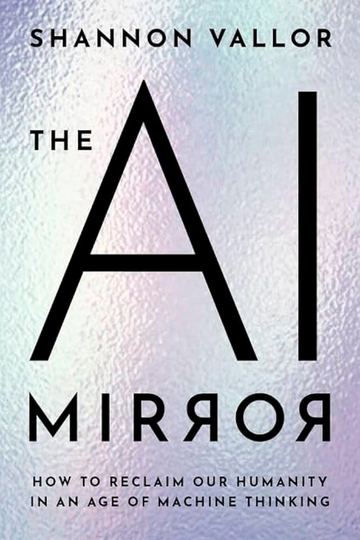
Vallor, Shannon. The AI Mirror. How to Reclaim Our Humanity in an Age of Machine Thinking. Oxford: Oxford University Press, 2024.
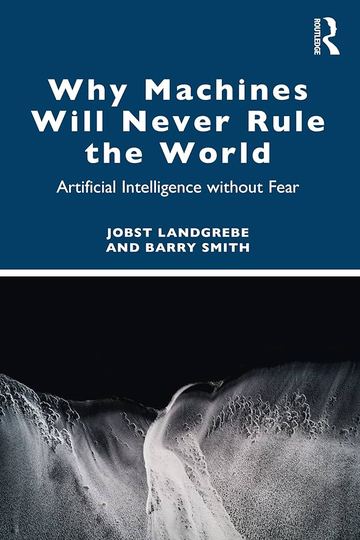
Landgrebe, Jobst, y Smith, Barry. Why Machines Will Never Rule the World. New York: Routledge, 2023.
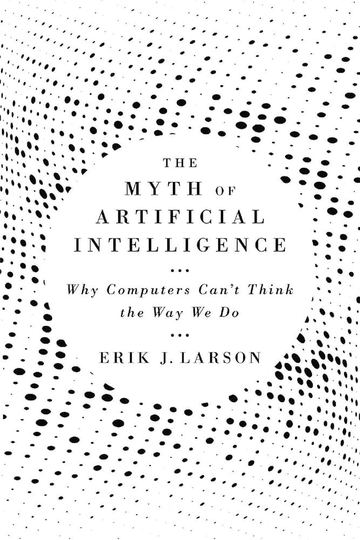
Larson, Erik. The Myth of Artificial Intelligence. Why Computers Can’t Think the Way We Do. Cambridge: Harvard University Press, 2021.
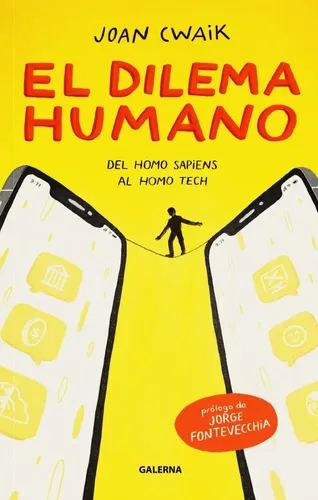
Cwaik, Joan. El dilema humano. Del Homo sapiens al Homo tech. Buenos Aires: Galerna, 2021.
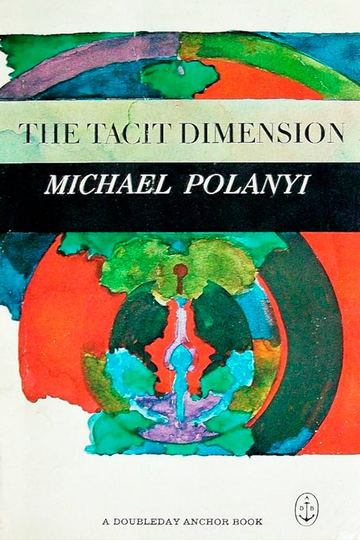
Polanyi, Michael. The Tacit Dimension. Chicago: University of Chicago Press, 1966.

Simondon, Gilbert. L'individuation à la lumière des notions de forme et d'information. Grenoble: Éditions Jérôme Millon. 2005. 
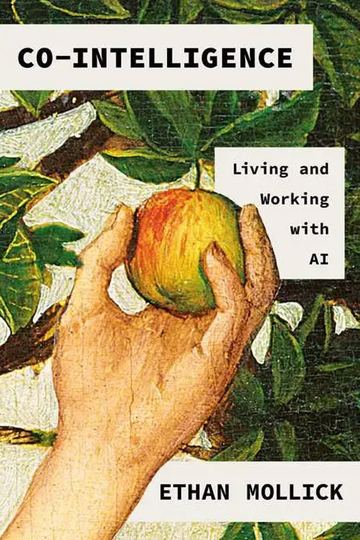
Mollik, Ethan. Co-Intelligence. Living and Working with AI. New York: Portfolio, 2024
Jaki, Stanley. Brain, Mind and Computers. Princeton: Princeton University Press, 1989.
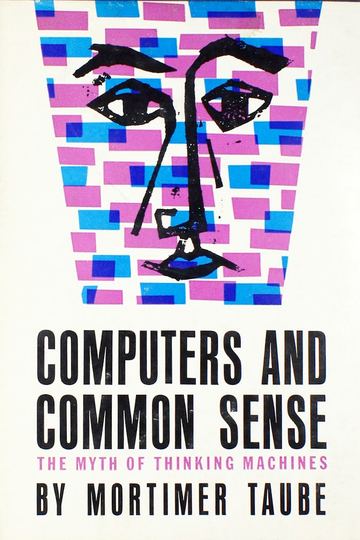
Taube, Mortimer. Computers and Common Sense. The Myth of Thinking Machines. New York: McGraw-Hill, 1961.
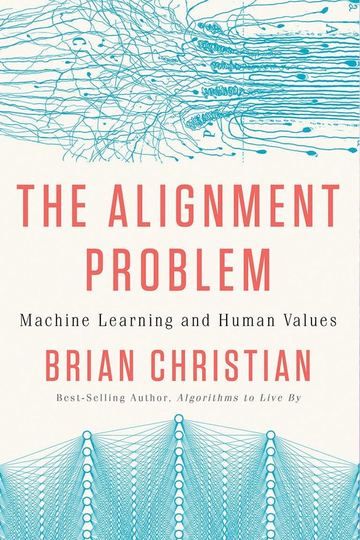
Brian Christian. The Alignment Problem: Machine Learning and Human Values. New York: W.W. Norton, 2020.
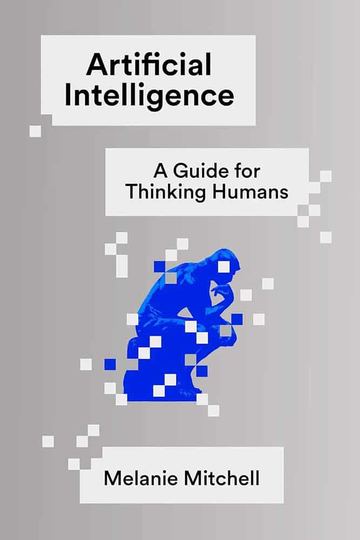
Melanie Mitchell. Artificial Intelligence: A Guide for Thinking Humans. New York: Farrar, Straus and Giroux, 2019.
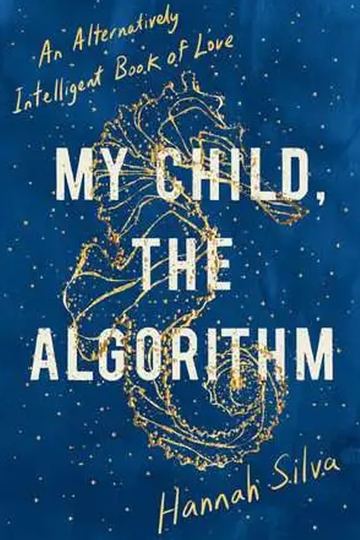
Silva, Hannah. My Child, the Algorithm. 
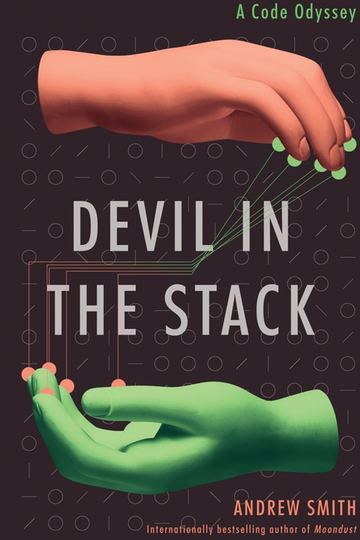
Smith, Andrew. Devil in the Stack: A Code Odyssey. New York: HarperCollins, 2024.
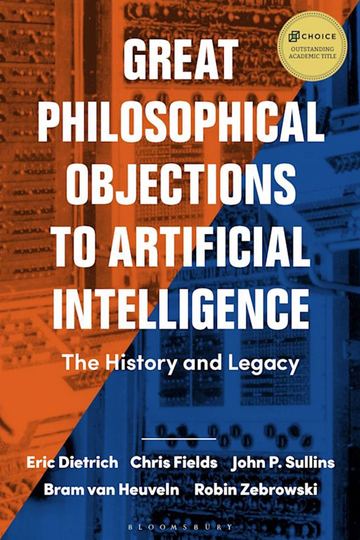
Dietrich, Eric, et al. Great Philosophical Objections to Artificial Intelligence. The History and Legacy of the AI Wars. London: Bloomsbury, 2021.

Proyecto Lumera

Humanidades Digitales
& Procesamiento del Lenguaje Natural


https://lumera.cloud/

Fundación Areopagiticum

Dionisio Areopagita
y su Legado


https://areopagiticum.org/

Artículos Relacionados

Amodei, Dario. “The Adolescence of Technology.” darioamodei.com (ensayo de autor) (2026). Enlace.
---------------
León XIV. “Carta encíclica «Magnifica humanitas» sobre la custodia de la persona humana en la era de la inteligencia artificial.” Libreria Editrice Vaticana / Santa Sede (2026). Enlace.
---------------
Gurnee, W.; Sofroniew, N.; Pearce, A.; Piotrowski, M. (+12). “Verbalizable Representations Form a Global Workspace in Language Models.” arXiv (interpretabilidad, Anthropic) (2026). Enlace.
---------------
Lerchner, Alexander. “The Abstraction Fallacy: Why AI Can Simulate But Not Instantiate Consciousness.” Google DeepMind / PhilArchive (2026). Enlace.
---------------
Shech, Elay. “Plato Warned Us About ChatGPT (And Told Us What to Do About It).” John Templeton Foundation (2026). Enlace.
---------------
Shaw, Steven; Nave, Gideon. “Thinking—Fast, Slow, and Artificial: How AI is Reshaping Human Reasoning and the Rise of Cognitive Surrender.” SSRN (working paper, Wharton) (2026). Enlace.
---------------
AI Index Steering Committee. “Artificial Intelligence Index Report 2026.” Stanford Institute for Human-Centered AI (HAI) (2026). Enlace.
---------------
Panel Científico Internacional Independiente sobre IA. “Preliminary Report of the Independent International Scientific Panel on AI.” Naciones Unidas (2026). Enlace.
---------------
Loru, Edoardo; Nudo, Jacopo; Di Marco, Niccolò; Santirocchi, Alessandro. “The simulation of judgment in LLMs.” Proceedings of the National Academy of Sciences (2025). Enlace.
---------------
Yousefi, Y.; Billi, M.; Rotolo, A. “Agentic AI: An EU AI Act Paradigm Shift?.” SSRN (working paper) (2025). Enlace.
---------------
Roschelle, Jeremy; McLaughlin, Elizabeth A.; Koedinger, Kenneth R. “Beyond Benchmarks: Responsible AI in Education Needs Learning Sciences.” Communications of the ACM (2025). Enlace.
---------------
Cameron R. Jones; Benjamin K. Bergen. “Large Language Models Pass the Turing Test.” arXiv (2025). Enlace.
---------------
Narayanan, Arvind; Kapoor, Sayash. “AI as Normal Technology: An alternative to the vision of AI as a potential superintelligence.” Knight First Amendment Institute, Columbia University (2025). Enlace.
---------------
Kak, Amba. “Testimony of Amba Kak before the U.S. House Committee on Energy & Commerce.” AI Now Institute / U.S. House Committee on Energy & Commerce (2025). Enlace.
---------------
Quattrociocchi, W.; Capraro, V.; Perc, M. “Epistemological Fault Lines Between Human and Artificial Intelligence.” arXiv (preprint) (2025). Enlace.
---------------
Aitken, M.; Briggs, M.; Mahomed, S. “Understanding the Impacts of Generative AI Use on Children: WP2 School-based Engagements.” The Alan Turing Institute (con LEGO Group / Children's Parliament) (2025). Enlace.
---------------
AI Now Institute (dir. Amba Kak y Sarah Myers West). “Artificial Power: 2025 Landscape Report.” AI Now Institute (2025). Enlace.
---------------
Douglas C Youvan, Microsoft's Majorana 1: A Paradigm Shift Toward Scalable and Fault-Tolerant Quantum Computing. Disponible en DOI: 10.13140/RG.2.2.11176.89607
---------------
Hao-Ping Lee, Advait Sarkar, Lev Tankelevitch, et al. The Impact of Generative AI on Critical Thinking: Self-Reported Reductions in Cognitive Effort and Confidence Effects From a Survey of Knowledge Workers. Disponible en https://www.microsoft.com/en-us/research/wp-content/uploads/2025/01/lee_2025_ai_critical_thinking_survey.pdf
---------------
Mrinank Sharma, Meg Tong, Jesse Mu, et al. Constitutional Classifiers: Defending against Universal Jailbreaks across Thousands of Hours of Red Teaming. Disponible en arXiv:2501.18837v1,31/01/2025.
---------------
Nestor Maslej, Loredana Fattorini, Raymond Perrault, et al. The AI Index 2025 Annual Report, AI Index Steering Committee, Institute for Human-Centered AI, Stanford University, Stanford, CA, Abril 2025.
---------------
Yizhou Fan1,Luzhen Tang, Huixiao Le1, et al. Beware of Metacognitive Laziness: Effects of Generative Artificial Intelligence on Learning Motivation, Processes, and Performance. Disponible en https://arxiv.org/abs/2412.09315.
---------------
van Rooij, Iris; Guest, Olivia; Adolfi, Federico; de Haan, Ronald. “Reclaiming AI as a Theoretical Tool for Cognitive Science.” Computational Brain & Behavior (2024). Enlace.
---------------
Robert Long; Jeff Sebo; Patrick Butlin; Kathleen Finlinson. “Taking AI Welfare Seriously.” arXiv (2024). Enlace.
---------------
Órgano Asesor de Alto Nivel sobre IA del Secretario General. “Gobernanza de la IA para la humanidad — Informe final.” Naciones Unidas (2024). Enlace.
---------------
“Megan Garcia v. Character Technologies, Inc., No. 6:24-cv-01903 (M.D. Fla.).” US District Court, Middle District of Florida (2024). Enlace.
---------------
World Economic Forum. “Shaping the Future of Learning: The Role of AI in Education 4.0.” World Economic Forum (2024). Enlace.
---------------
The Royal Society. “Science in the age of AI: How artificial intelligence is changing the nature and method of scientific research.” The Royal Society (2024). Enlace.
---------------
Piscitelli, Alejandro. “Polímatas: el perfil antidisciplinario del trabajador del futuro.” Fundación Santillana — XV Foro Latinoamericano de Educación (2.ª ed.), ISBN 978-950-46-7273-9 (2023). Enlace.
---------------
Pace Giannotta, Andrea. “Embodied artificial intelligence in science fiction.” Prometeica - Revista de Filosofía y Ciencias (2022). Enlace.
---------------
LeCun, Yann. “A Path Towards Autonomous Machine Intelligence (v0.9.2).” OpenReview (position paper, Meta AI / NYU) (2022). Enlace.
---------------
Preziosa, María Marta. “La mímesis según René Girard y la toma de decisiones éticas en la empresa.” Veritas, vol. 52 (2022). Enlace.
---------------
Baria, Alexis T.; Cross, Keith. “The brain is a computer is a brain: neuroscience's internal debate and the social significance of the Computational Metaphor.” arXiv (preprint) (2021). Enlace.
---------------
Gunkel, David, y Jimmy Wales. "Debate: What Is Personhood in the Age of AI?" AI & Society 36 (2021): 473–486.
---------------
Ballantyne, Nathan. "Epistemic Trespassing." Mind 128, no. 510 (abril 2019): 367-395.
---------------
Gary Marcus. “Deep Learning: A Critical Appraisal.” arXiv (2018). Enlace.
---------------
Müller, Vincent. Philosophy and Theory of Artificial Intelligence 2017. Studies in Applied Philosophy, Epistemology and Rational Ethics, Sapere 44. Berlin: Springer, 2018.
---------------
Bishop, John. "Trouble with Computation: A Refutation of Digital Ontology." En Digital Philosophy: An Exploration of Ontological Computation, 2017.
---------------
Braga, Antonio, y Robert Logan. "The Emperor of Strong AI Has No Clothes. Limits to Artificial Intelligence." Information 8, no. 156 (2017).
---------------
Shanahan, Murray. "The Frame Problem." En The Stanford Encyclopedia of Philosophy, editado por Edward N. Zalta.
---------------
Biba, Erin. “An Apocalypse Think Tank.” Scientific American (2015). Enlace.
---------------
Polanyi, Michael. "Can the Mind Be Represented by a Machine? Documents of the Discussion in 1949." Polanyiana 2010, no. 1-2: 35-
---------------
Bishop, John. "A Cognitive Computation Fallacy? Cognition, Computations and Panpsychism." Cognitive Computation 1, no. 3 (2009): 221-233
---------------
Moor, James. “The Dartmouth College Artificial Intelligence Conference: The Next Fifty Years.” AI Magazine 27(4), AAAI (2006). Enlace.
---------------
Martínez-Freire, Pascual F. “El futuro de las máquinas pensantes.” Diálogo Filosófico, nº 35, pp. 235-250 (1996). Enlace.
---------------
Brooks, Rodney A. “Elephants don't play chess.” Robotics and Autonomous Systems 6(1-2), 3-15 (1990). Enlace.
---------------
Dennett, Daniel. "Can Machines Think?" En How We Know, editado por Michael Shafto. New York: Harper & Row, 1984.
---------------
Dennett, Daniel.. "Cognitive Wheels: The Frame Problem of AI." En Minds, Machines and Evolution, editado por Christopher Hookway, 129-150. Cambridge: Cambridge University Press, 1984.
---------------
Bunge, Mario. "Technology as Applied Science." En Contributions to a Philosophy of Technology. Studies in the Structure of Thinking in the Technological Sciences, editado por Friedrich Rapp, 3-22. Boston: D. Reidel Publishing Co., 1974.
---------------
Irving J. Good. "The First Ultraintelligent Machine", Advances in Computers, 6, 31-85, 1965, New York Academic Press.
---------------
John R. Lucas. "Minds, Machines and Gödel", Philosophy, 36, 112-127, Disponible en doi:10.1017/S0031819100057983.
---------------
Bunge, Mario. "Do Computers Think?" Parte I y II. Servicio Técnico Científico, (1956): 139-148; 212-219.
---------------
Bunge, Mario. "Can Machines Think?" Discovery, vol. 14 (1953): 151.
---------------
Polanyi, Michael. "The Hypothesis of Cybernetics." The British Journal for the Philosophy of Science 2, no. 8 (1952): 312-315.
---------------

Enlaces Recomendados