

Gustavo Ángel Riesgo
Universidad de Buenos Aires.
Universidad Austral.
Universidad del Norte Santo Tomás de Aquino.
ORCID 0000-0003-3690-0505






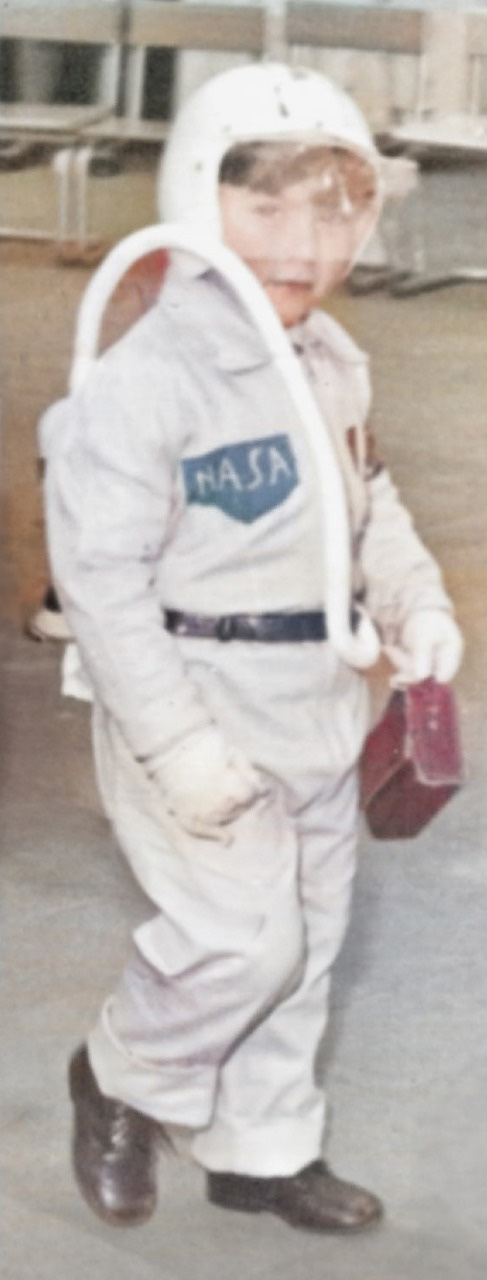


I’m sorry Dave, I’m afraid I can’t do that…¹
My first concrete memory –although perhaps imagined as such, and likely also shared by many others in my generation– is the television broadcast of the Apollo 11 mission, its landing on the Moon captured in a grayscale as blurry as it was astonishing. The constitutive dimension of memory intersects with a budding vocational interest in the remembrance of this event that married technology and space exploration. A few years later and having forayed into several encyclopedias, I could draw simplified orbital insertion diagrams or understand a technical glossary of basic astronomy and astronautics.
It is the winter of 1976. In a bare and freezing bedroom, under the dim yellow light of an old bedside lamp, I peek for the first time into the pages of Arthur C. Clarke’s 2001: A Space Odyssey. The book, held by the tips of my fingers sticking out from under the blankets, does not operate only in the subgenre that the title had hinted at. For it is not a chronicle of space travel with science fiction ingredients a la Verne, Bradbury or Asimov, but reveals itself to be much more. The thrill of celestial exploration is overtaken by the fascination –and fear– about something more alluring and ominous. The imposing presence of a computer, at once awe-inspiring and mysterious, is at the core of this reading experience, which I would be revisiting obsessively for many years to come.
My discovery of “artificial intelligence” as a subject thus begins with a proper noun: HAL Series 9000. The chance encounter with HAL and its vast universe took on the dimension of a new original event that displaced –without suppressing it– my earlier cosmological interest. From then on, it unfolded in countless re-readings and bibliographic queries, finally turning from a vocation into a profession. The initial question became a permanent one: Is it possible to build a “superintelligence”?
More than forty years later, that same question and its corollaries are striking in their current relevance and ubiquity in a global culture. Having spent considerable time acquiring the technical knowledge and reflecting philosophically on the subject, I have dared to attempt an interdisciplinary answer that is also the result of a personal synthesis. This Philosophy of Artificial Intelligence is presented by someone not very different from that child, equipped with a more robust scholarly toolkit but carrying the same spirit, which no one has expressed better than the great poet Rilke:
Ich lebe mein Leben in wachsenden Ringen,
die sich über die Dinge ziehn.
Ich werde den letzten vielleicht nicht vollbringen,
aber versuchen will ich ihn.²
I may not complete that last circle… but I will keep trying!
[1] Stanley Kubrick, and Arthur C. Clarke. 2001: A Space Odyssey. Definitive Script. 1966. 1h40’38”.
[2] Rainer Maria Rilke. Das Stundenbuch. Erstes Buch. “Das Buch von Münchischen Leben” (1899), Leipzig: Insel. 1955. p.9
[3] Rainer Maria Rilke, Rilke’s Book of Hours. Love Poems to God. Trans. by Anita Barrows and Joanna Macy, New York: Riverhead Books, 2005.
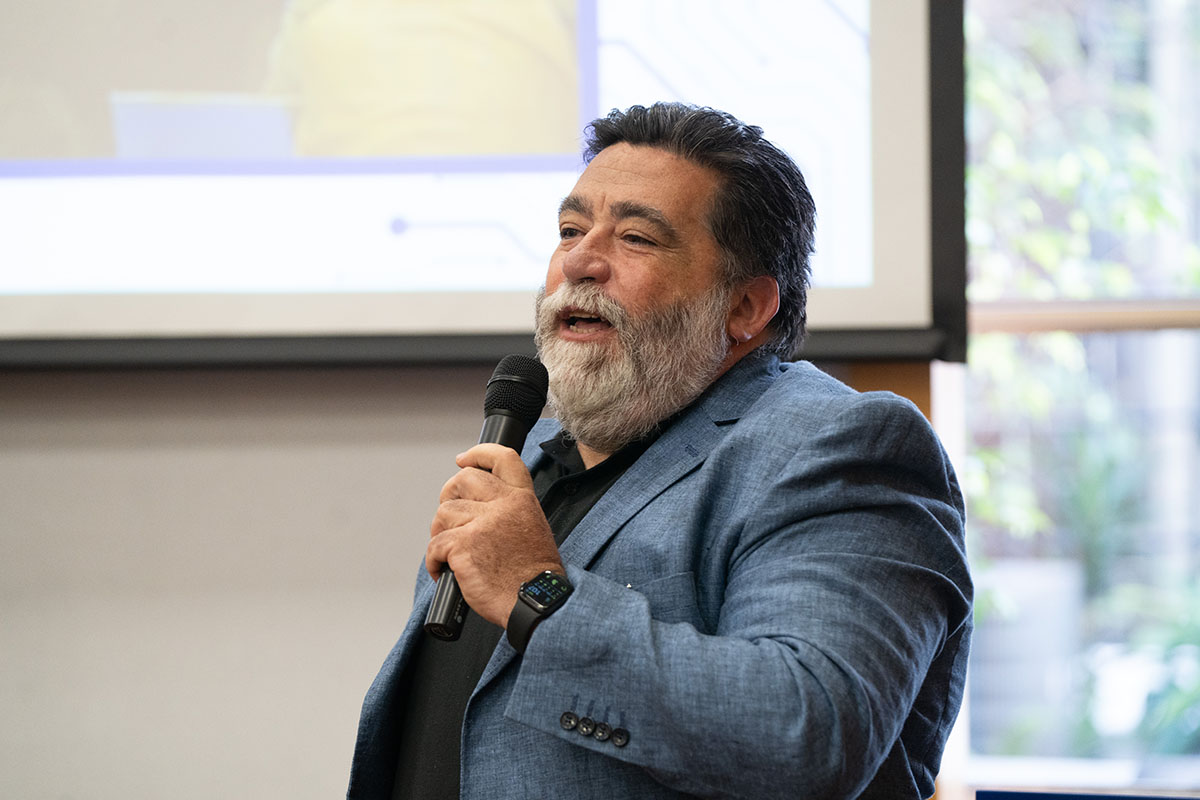
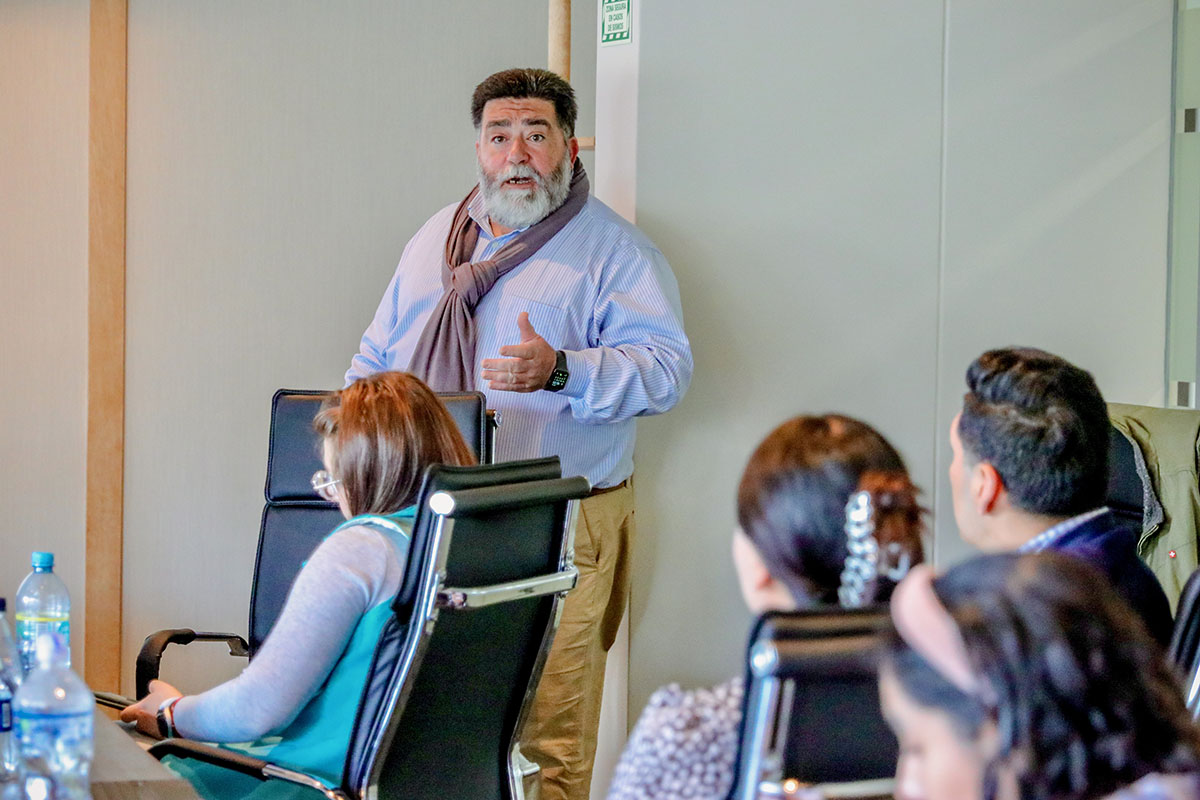
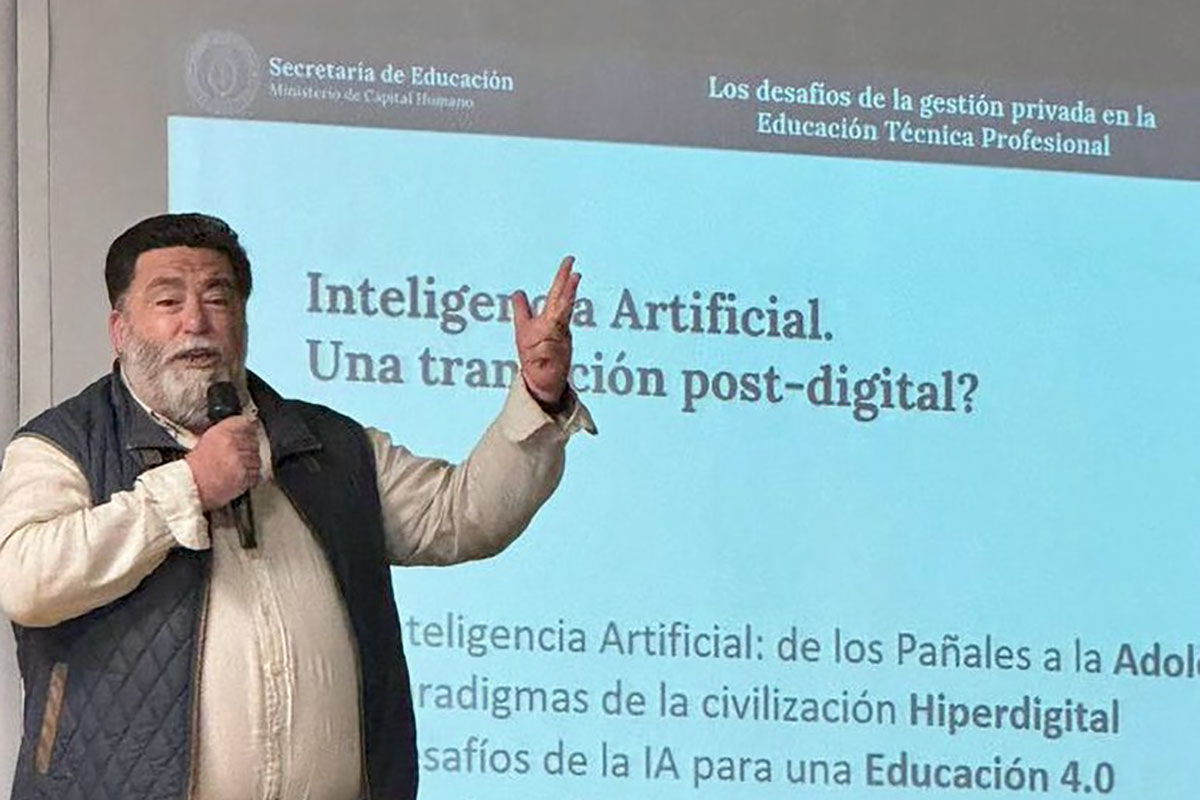
Lifetime student, Argentine, married, and father of three. A Doctor in Artificial Intelligence and a Doctor in Philosophy, he has built a professional and intellectual career spanning more than thirty years at the intersection of technology, knowledge, and organizations. His background integrates computing and the humanities. This convergence of formal sciences, engineering, and philosophical thought has oriented much of his work toward the epistemological, cognitive, and ontological foundations of artificial intelligence, with particular attention to the problems of representation, language, knowledge, and computational reasoning.
For more than three decades, he has worked in the knowledge economy, business intelligence, advanced analytics, data science, and artificial intelligence for organizations across Europe and the Americas. He is Chairman of AXIS HUMAN, a U.S.-based company dedicated to the development of artificial intelligence solutions and systems. His professional experience in the design, implementation, and application of intelligent technologies progressively led his research toward a more fundamental question: what it means to attribute intelligence to a machine. From this convergence emerged his work in the Philosophy of Artificial Intelligence, a field in which he was a pioneer, founding and holding the chair of the first university professorship specifically devoted to this discipline. His research approaches artificial intelligence from an interdisciplinary perspective that brings together philosophy of science, epistemology, philosophy of mind, cognitive science, and computer science.
In parallel, he conducts research in medieval philosophy and Neoplatonism, particularly on Dionysius the Areopagite and the tradition of the metaphysics of light. He founded and directs the Areopagiticum Foundation, an institution devoted to philosophical research and the study of the Corpus Dionysiacum, as well as to the development of new methodologies for the Digital Humanities through artificial intelligence. From there, he leads LUMERA, an initiative focused on the rigorous application of computational technologies to the analysis, preservation, and study of philosophical and humanistic sources.
He is also deeply engaged in teaching as a university professor, visiting professor, and lecturer at academic institutions in Argentina and abroad. His courses and seminars focus on artificial intelligence, philosophy of technology, epistemology, digital transformation, and the governance of intelligent systems, integrating a technical understanding of these technologies with the analysis of their conceptual foundations and their human and institutional consequences. His experience also extends to public policy and artificial intelligence governance. He has been invited as a specialist and speaker by government agencies, scientific institutions, and legislative bodies, including both chambers of the Argentine National Congress. In the field of education, he developed PAIDEIA —the Argentine Program for Innovation in Education with Artificial Intelligence—, an initiative aimed at incorporating these technologies into educational processes while preserving and strengthening human judgment, learning, and cognitive capacities.
He is an author, translator, and editor of specialized books and articles, and actively participates in national, Latin American, and international organizations involved in the development and governance of artificial intelligence, including CESSI-HUBia, ALETI, and WITSA’s AI Expert Panel.
Latest posts
Coming soon