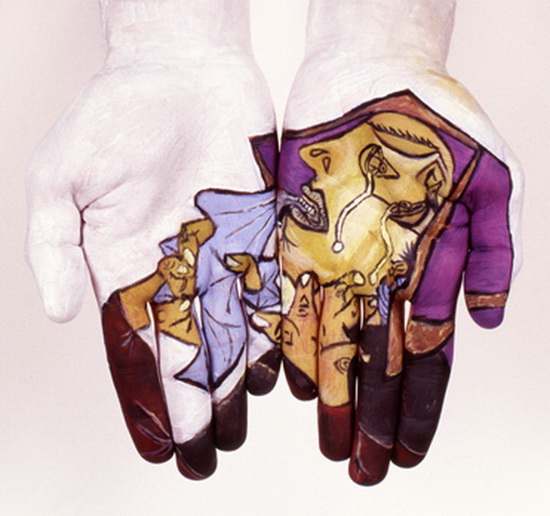
Philosophy of Artificial Intelligence
The Philosophy of Artificial Intelligence (philofAI) is an interdisciplinary specialization within the Philosophy of Science, directly connected to the foundations of the Natural and Cognitive Sciences. Its formal object addresses central questions concerning the definition, limits, and implications of the set of techniques within Computer Science that emulate operations in humans commonly referred to as perception and knowledge—capacities typically associated with intelligence. The Philosophy of Artificial Intelligence seeks to formulate precise questions that arise from the invention of AI: whether machines can think, learn, or possess consciousness. It also aims to provide the most well-articulated answers in terms consistent with current science and philosophy.
A Vision of Artificial Intelligences
In recent years, there has been a renewed interest in Artificial Intelligence (AI), driven by the achievements of Pre-Trained Large Language Models (PT-LLMs) based on Machine Learning (ML) techniques applied to artificial neural networks (ANNs). These technologies enable millions of users worldwide to access vast amounts of data through multiple forms of interaction. However, this does not always translate into real information or active knowledge. The generation of knowledge requires personal intelligence capable of assigning meaning to signs—producing information from data and knowledge from information.
This section presents a general overview of the benefits and challenges posed by some of today’s AIs, seeking to maximize the development and use of these technologies while always keeping in mind the irreplaceable role of the human factor in the equation.

TOPICS

EDUCATION AND ARTIFICIAL INTELLIGENCE
The advance of generative AIs represents great opportunities in work and study, but also significant challenges for the redesign of roles and capabilities.
SCIENCE FICTION NARRATIVES AND ARTIFICIAL INTELLIGENCE
Science fiction, defined by Gernsback as an imaginative extrapolation of true natural phenomena, anticipates philosophical questions about AIs.
PERSONAL ARTIFICIAL INTELLIGENCE
From manually executed processes to cybernetic automation: the relation between human control and technical artifacts reaches personal AI.